
UBBPd5 Equipment information & support
Huawei UBBPd5 is a high-density 6-port baseband processing unit board supporting LTE FDD, LTE TDD, and 5G NR, providing massive throughput for dense multi-carrier networks.
Equipment information
- Brand
- Huawei
- Equipment model
- UBBPd5
- Equipment type
- Baseband Units & Processing Boards (BBU)
- Controller / software version
- Confirm against the installed equipment
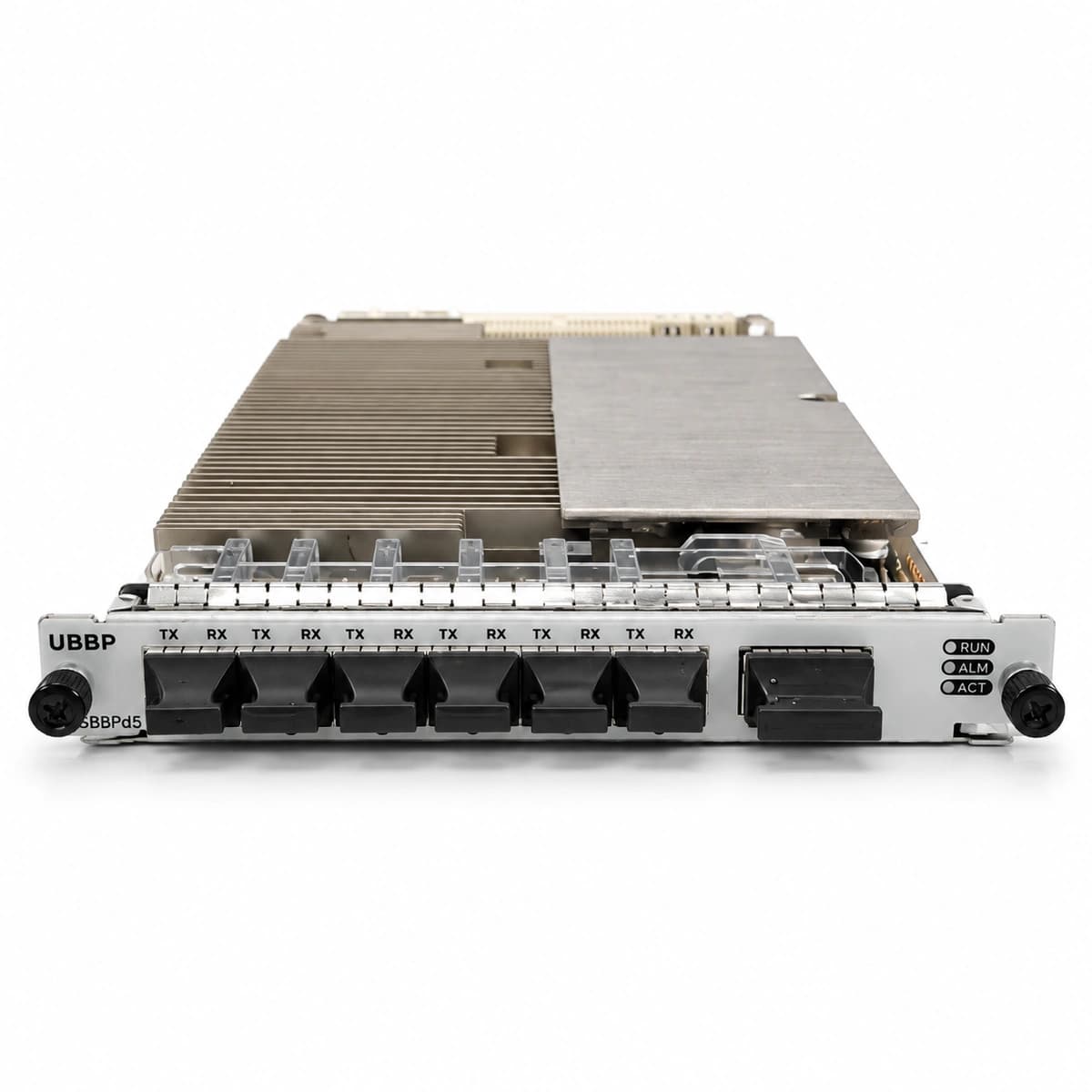
Information below comes from the current product catalogue. Confirm the controller, software version and configuration of the installed equipment separately.
- Board Function Type
- High-Density Baseband Processing Unit (UBBPd5)
- Supported RAT Modes
- LTE FDD / LTE TDD / 5G NR
- Transmission Interfaces
- 6x SFP/SFP+ (up to 10 Gbps CPRI/eCPRI)
- Power Consumption
- Typical 80W (Max 110W)
- Subrack Compatibility
- Huawei BBU3910 / BBU5900 High-Density Slot
- Operating Temperature
- -20°C ~ +55°C
Alarms & troubleshooting
No public alarm guide is available for this model yet
Share the original alarm text and controller version to help identify applicable documentation. Alarm definitions and procedures may vary by version.
Share on-site informationShare on-site information
- 01
Identify the exact model
Record the nameplate, system model and controller or module model.
- 02
Keep the alarm details
Record the full alarm text, indicator colour, timing and whether it persists.
- 03
Describe recent changes
Note recent replacements, software updates or configuration changes.
Record information visible in the existing interface. Electrical measurements, disassembly and replacement should follow the applicable manufacturer's manual and be performed by qualified personnel.
Related technical articles
Browse the technical guides or send a question about this model.
View all articlesNeed a replacement module or supporting equipment?
Confirm the full model, system configuration and compatibility requirements before enquiring about suitable products.
Have a model and an on-site issue?
Share the exact model, alarm text and observed symptoms to help identify relevant information and compatibility requirements.