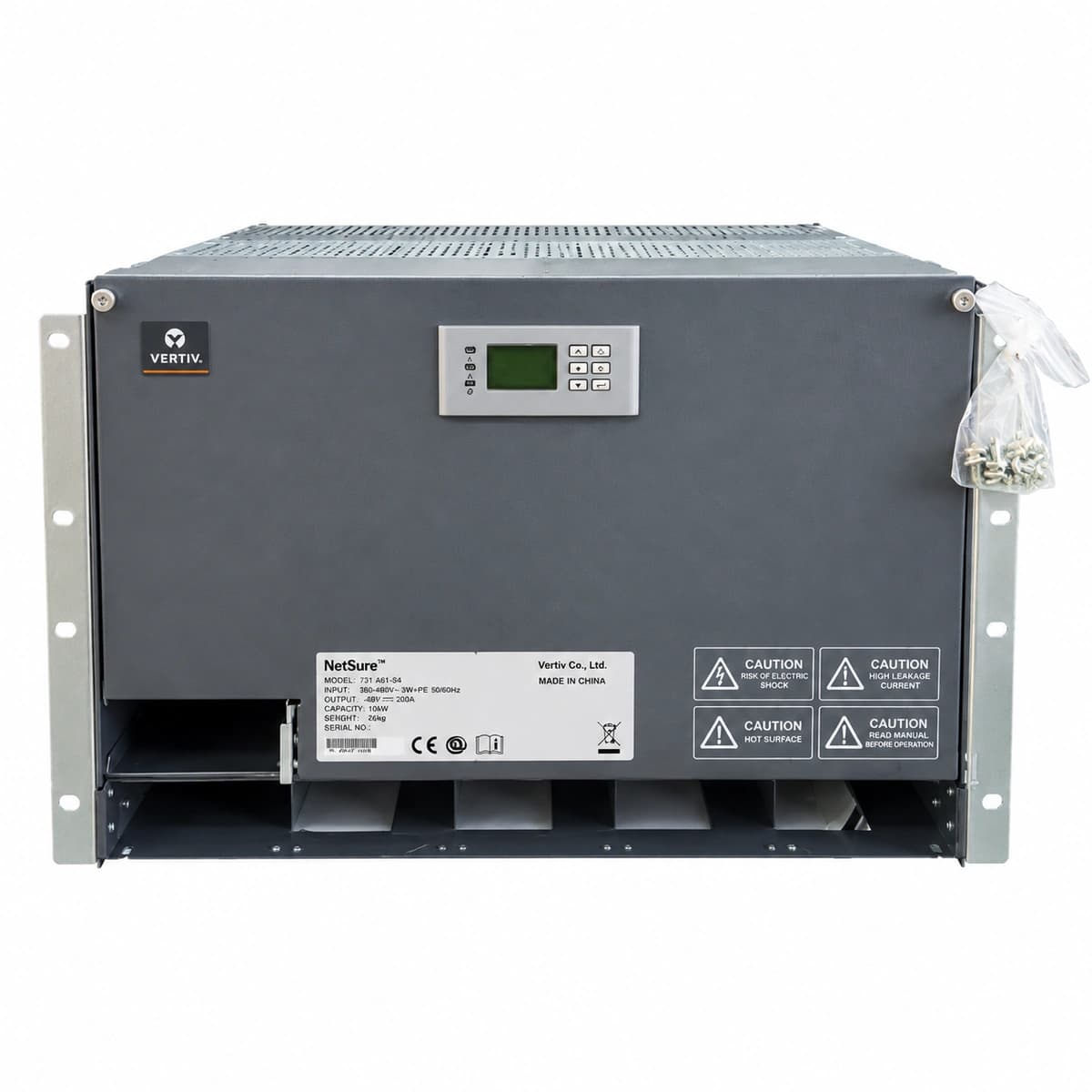
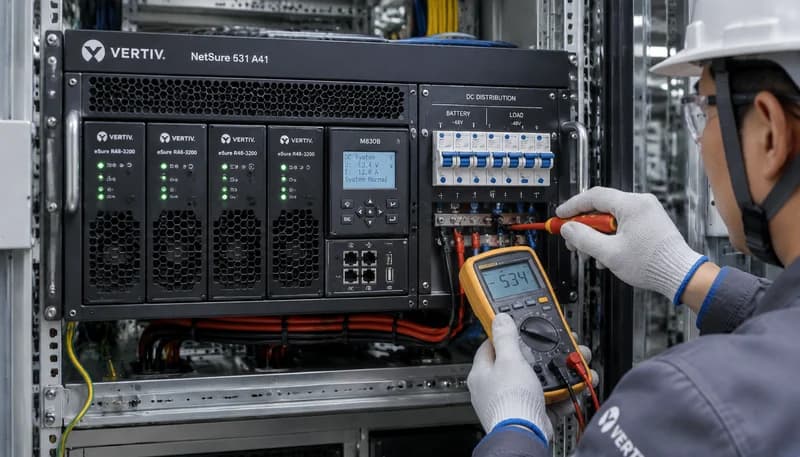
RECT-FAIL
Module Alarm LED Steady Red; Controller Alarm LED Flashing Red
Internal power stage failure, auxiliary SMPS fault, fan lock-rotor, or sustained output overvoltage shutdown.
Check for airflow blockages in the module chassis; query the specific fault sub-code via controller; reseat the rectifier to verify connector integrity; if the red fault LED persists upon re-insertion, replace the rectifier module.
AC-FAIL
Rectifier AC Green LEDs OFF; Controller Alarm LED Amber/Red
Complete utility power outage, upstream AC input breaker trip, damaged/shorted surge protection device (SPD), or phase voltage below 85VAC.
Verify grid availability; inspect the subrack main AC input breaker and upstream distribution board; measure phase-to-neutral and phase-to-phase voltages with a DMM; inspect SPD status indicator flag and replace if blown.
DC-VOLT-LOW
Controller Alarm LED Steady Red; Internal Audible Buzzer Active
Prolonged AC mains outage causing deep battery discharge below low-voltage threshold, multiple rectifier failures, or load exceeding total rectifier output rating.
Dispatch emergency mobile generator to restore AC feed immediately; shed secondary non-vital loads manually if LLVD has not tripped; check LLVD contactor operational state; plug in spare rectifier modules into vacant slots.
BATT-TEMP-HIGH
Controller Warning LED Steady Amber
Battery compartment air conditioner failure, restricted cabinet ventilation, excessive ambient site temperature, or internal thermal runaway in compromised cells.
Inspect battery room HVAC equipment; scan all battery monoblocs using a thermal imaging camera to detect isolated thermal anomalies; isolate the defective battery branch circuit breaker if cell bulging or thermal runaway is confirmed; verify sensor attachment position.
SPD-FAIL
Surge Protector Window Shows Red Flag; Controller Warning LED Amber
AC or DC surge protection device intercepted heavy lightning surge or grid switching transient; internal metal oxide varistors (MOV) degraded, shorted, or thermal disconnector opened.
Verify that grounding resistance meets telecom standards (typically ≤5Ω); inspect the SPD dry-contact alarm signal harness; safely extract the tripped SPD cartridge using insulated tooling and replace it with an identical OEM-rated spare module.