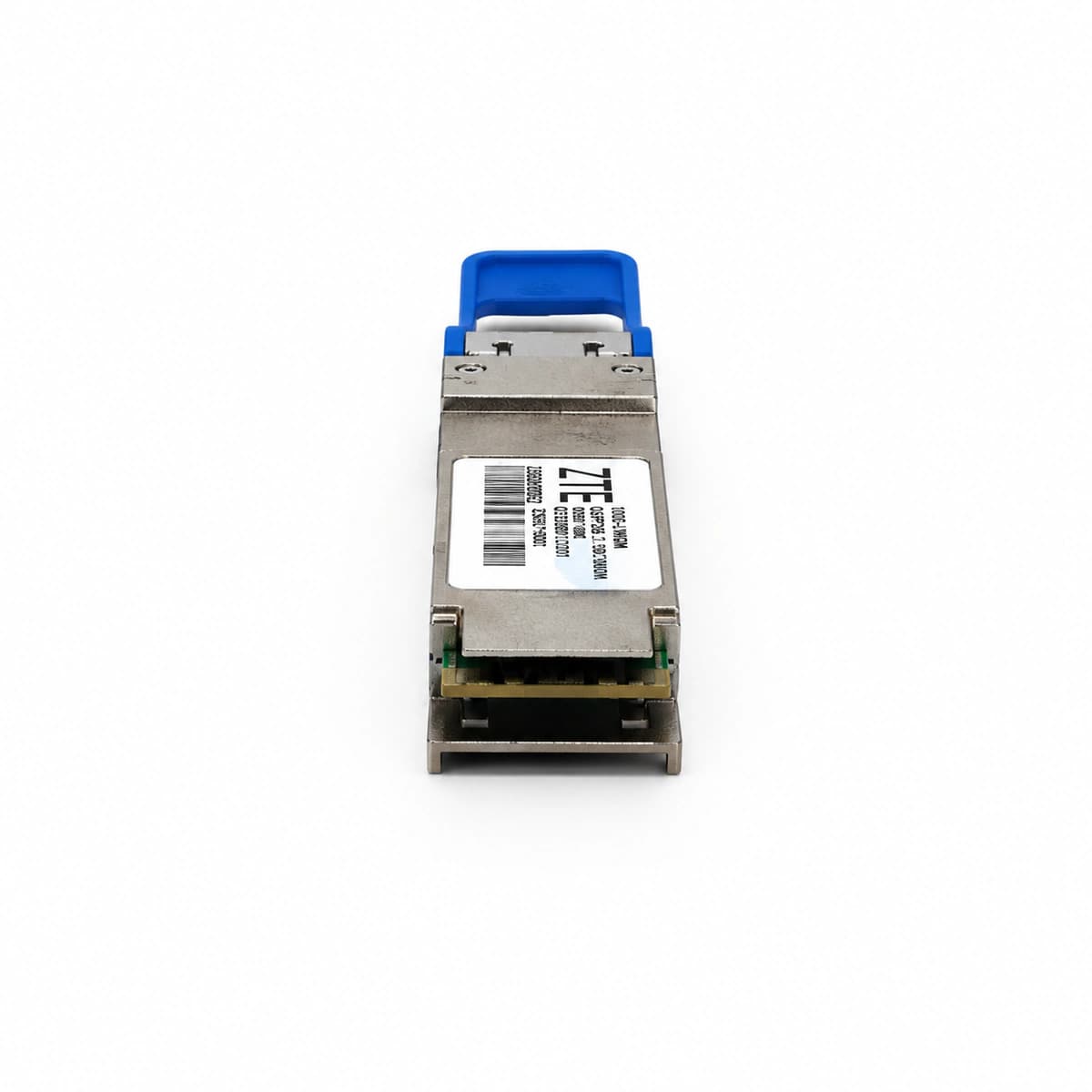
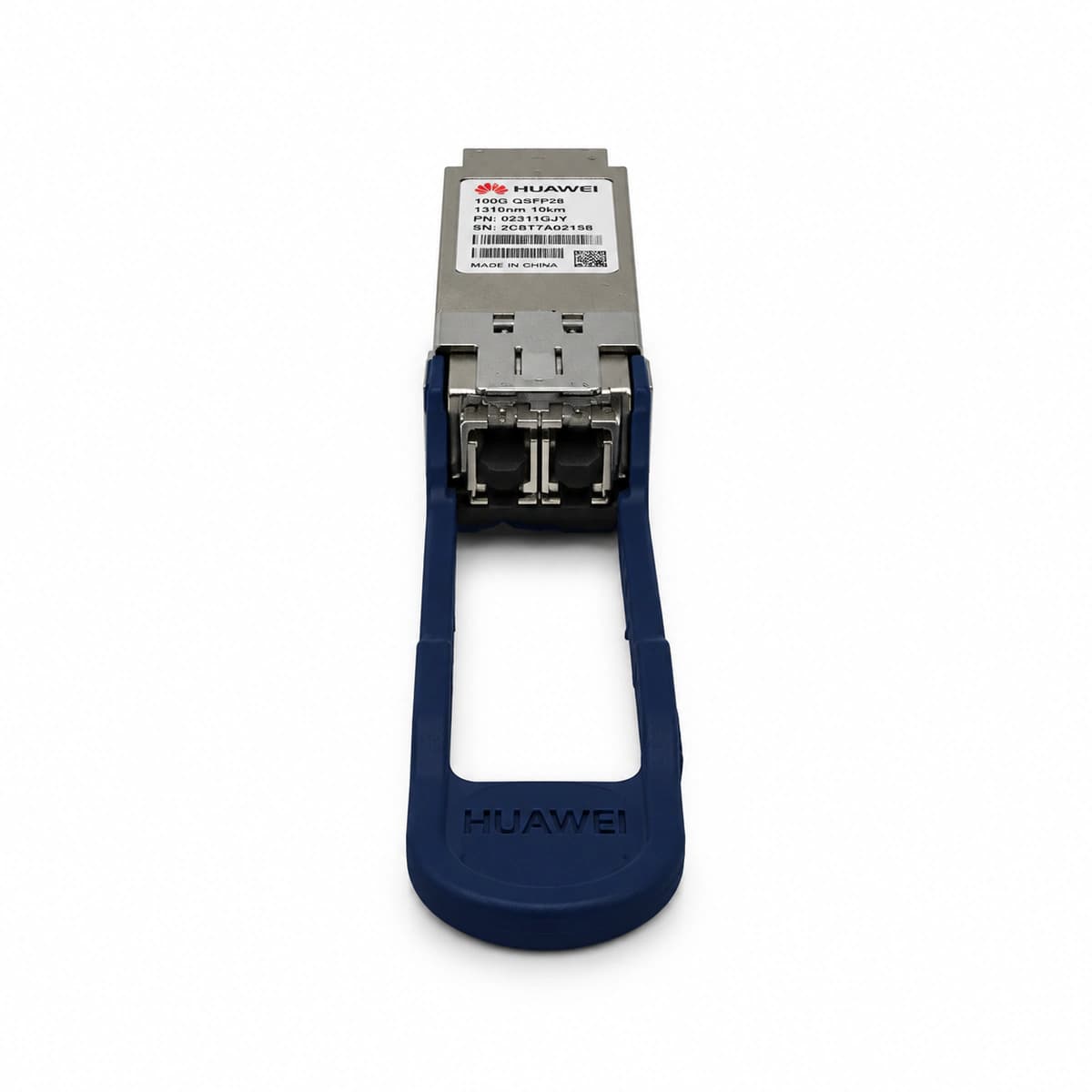
RX_LOS (Optical Receive Loss of Signal)
Line card port LED solid Red, LINK LED Off
Remote transmitter disabled or optical power degraded; fiber break, bend loss, contaminated LC connector; or QSFP28 ROSA component hardware failure.
1. Check real-time DDM RX power via CLI or NMS;
2. Measure incoming optical power with an optical power meter across LWDM wavelengths (1295.56–1309.14nm) to confirm it is within standard range (-10.5 dBm to +2.5 dBm);
3. Inspect and clean optical LC patch cords and the QSFP28 optical optical receptacle using a one-click fiber cleaner;
4. Reseat or replace the ZTE QSFP28 optical transceiver if input power is compliant but alarm persists.
MODULE_TEMP_HIGH (Transceiver High Temperature Alarm)
Line card Alarm LED blinking Amber, chassis ALARM LED lit
Ambient temperature exceeding operational limits, clogged chassis air filters, cooling fan tray failure, or internal cooling EML laser circuit thermal run-away.
1. Execute CLI commands to read module DDM internal temperature and chassis fan RPMs;
2. Inspect equipment air intakes/exhausts and clean dust filters to restore unobstructed airflow;
3. Check facility HVAC/air conditioning systems to ensure room ambient is within 20°C to 25°C;
4. If only this specific QSFP28 exceeds 75°C while neighboring ports are normal, replace the defective transceiver.
TX_BIAS_HIGH (Laser Bias Current High Alarm)
Line card port LED solid Amber
Internal transmitter TOSA laser diode aging, thermoelectric cooler (TEC) failure, or driver circuit degradation requiring excessive bias current to maintain target optical output.
1. Retrieve module DDM diagnostics to evaluate TX Bias current and TX Output Power across all 4 lanes (Lane 0–3);
2. Compare values against manufacturer high-alarm thresholds (typically 80–100 mA);
3. Check the remote interface for accumulating pre-FEC/post-FEC or CRC error counters;
4. Since this indicates imminent transmitter end-of-life, schedule a maintenance window to replace the ZTE 100G LWDM transceiver.
PRE_FEC_EXC (Pre-FEC Bit Error Rate Excessive Alarm)
Line card port LED blinking Amber (1Hz)
Optical link chromatic dispersion, poor return loss causing optical multipath reflection, low OSNR from marginal optical power, or thermal wavelength drift outside the LWDM demux channel window.
1. Poll port FEC statistics to verify corrected error trend and ensure uncorrectable codewords remain at zero;
2. Check RX optical power across all four lanes to confirm operation within optimal window (-8 dBm to 0 dBm), adding attenuators if overloaded;
3. Inspect patch cable bend radii and use OTDR to locate localized high-loss or reflective connector events;
4. Replace patch cables; if uncorrectable FEC drops persist, replace the QSFP28 to eliminate internal TEC wavelength drift.
MOD_I2C_FAIL (Transceiver I2C Bus Communication Failure)
Line card port LED Off or slow blinking Red
Poor physical contact of QSFP28 gold fingers, I2C bus SDA/SCL lockup, transceiver internal MCU firmware crash, or port power rail failure on the host line card.
1. Query transceiver EEPROM via CLI; if timeout or unreadable response occurs, I2C lockup is present;
2. Unseat the ZTE QSFP28 module and inspect/clean the gold-finger contacts using an ESD-safe lint-free wipe;
3. Inspect the host QSFP28 cage pins for physical bending, damage, or foreign particles;
4. Re-insert and lock transceiver firmly; if failure persists, test the module in an alternate port to determine if the issue is the transceiver or the host line card I2C controller.