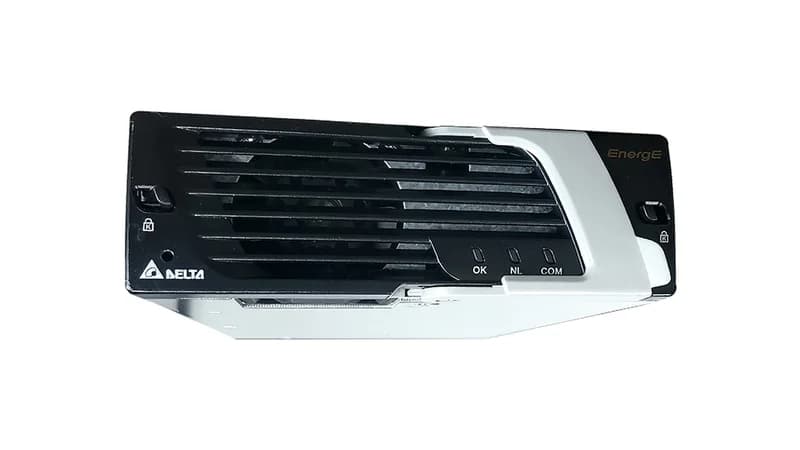
1. Core Electrical Specifications and Robust Topology Architecture
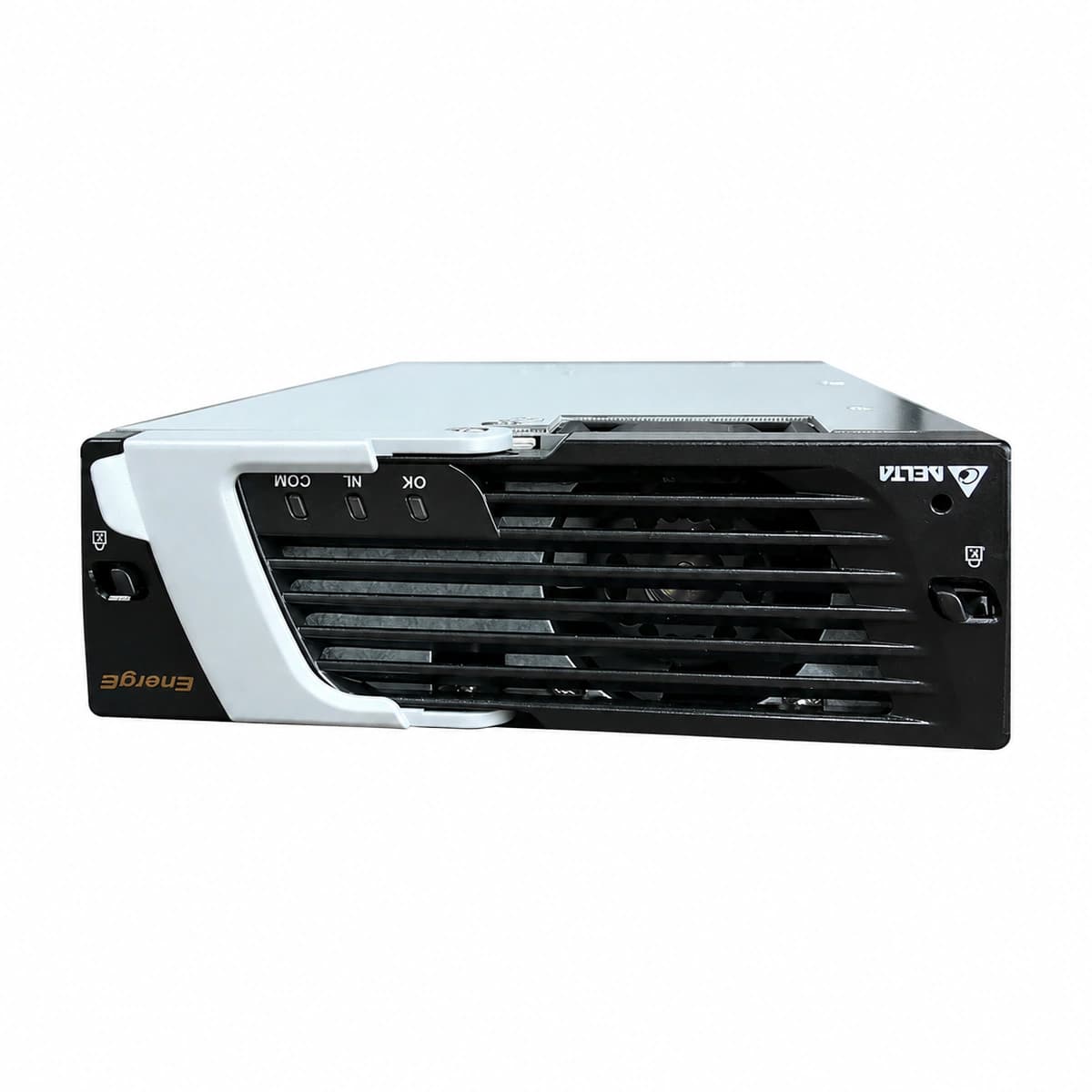
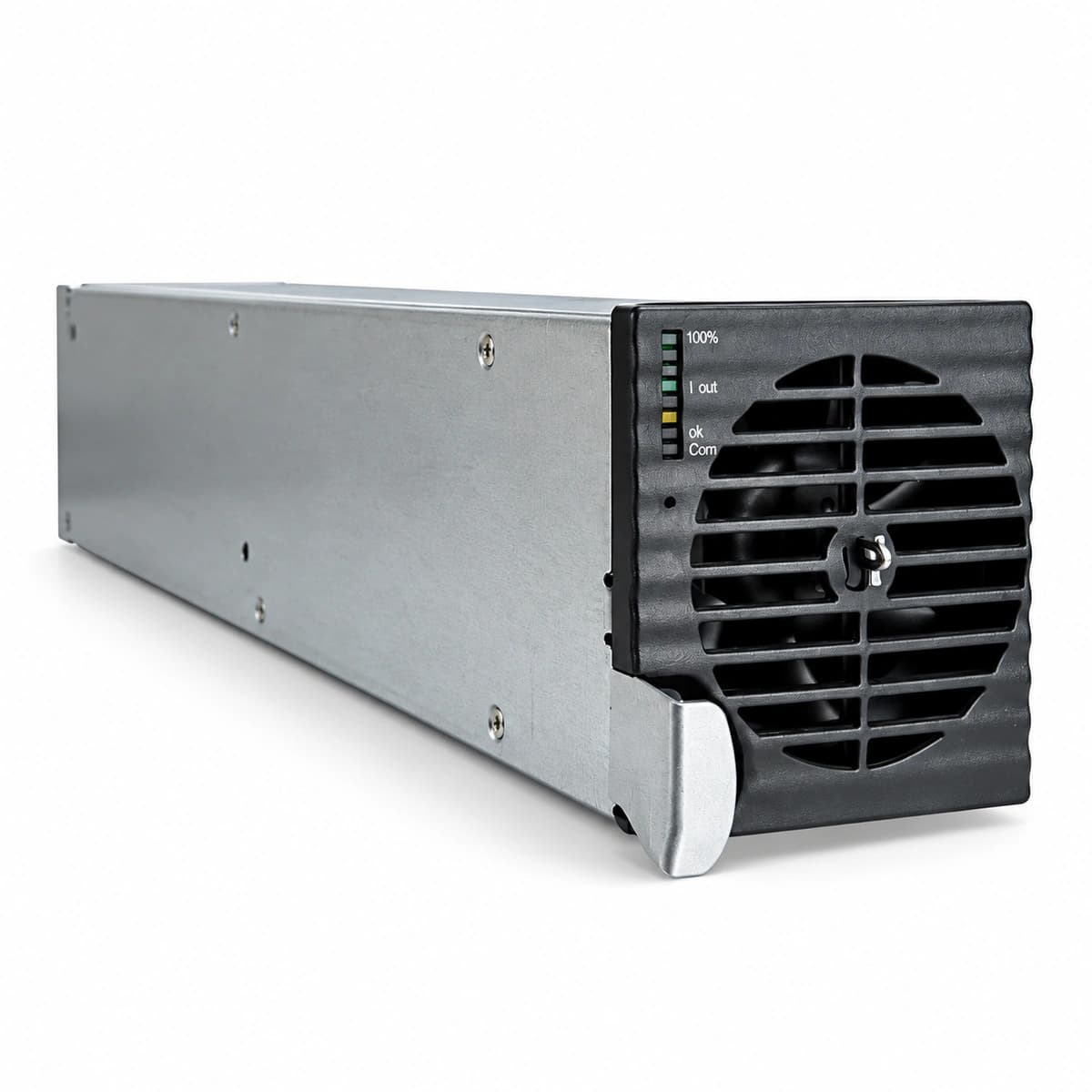
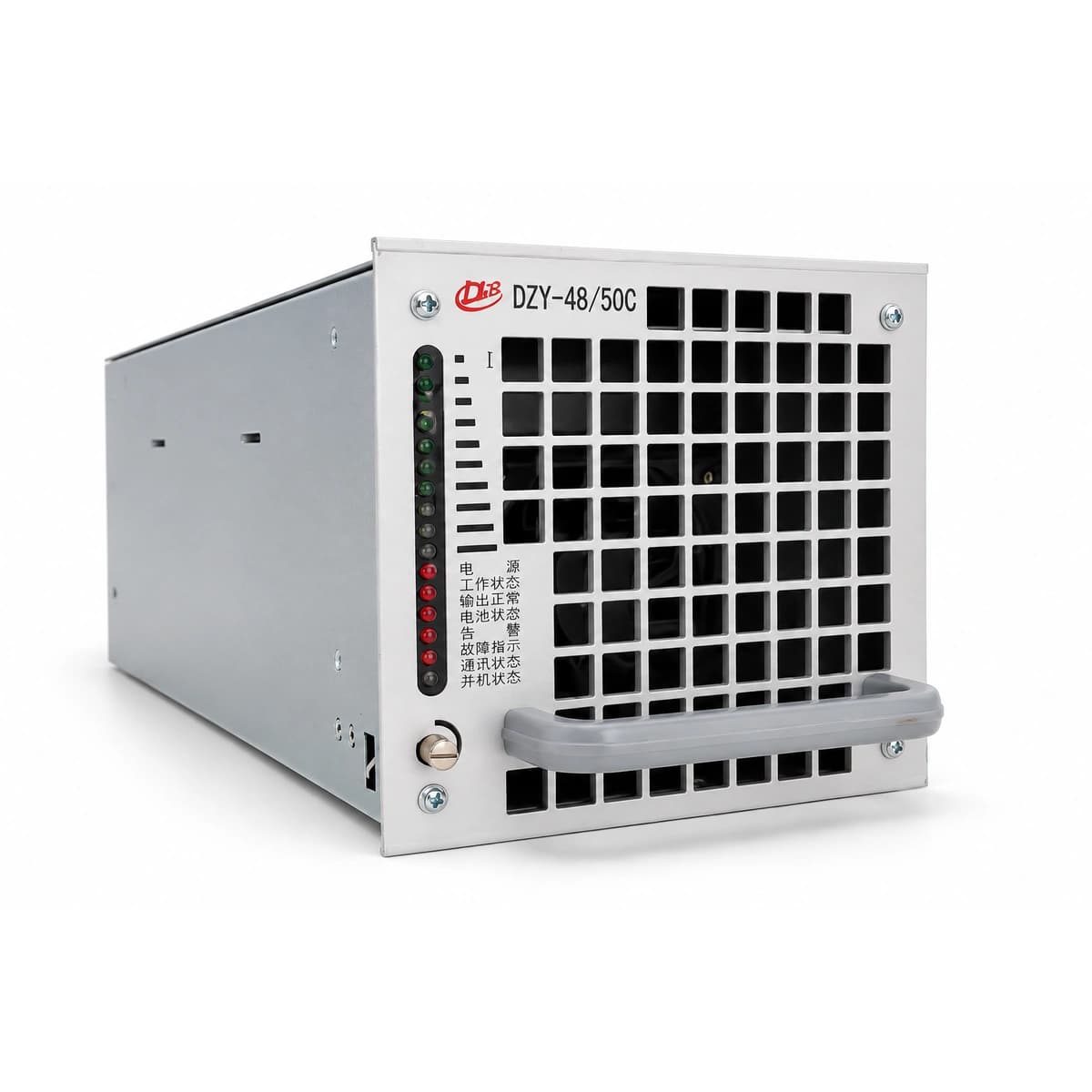
The Delta ESR-48/56A stands as one of the most reliable and widely deployed industrial-grade switching rectifiers across carrier telecom networks, wireless macro base stations, and rail transit communication hubs. Designed for nominal -48VDC power bus architectures (with an adjustable voltage range spanning -42VDC to -58VDC), each module delivers a continuous rated current of 56A and a maximum DC output capacity of 3000W. Built upon Delta robust industrial heritage, the ESR-48/56A utilizes dual interleaved active power factor correction (PFC) paired with a resonant half/full-bridge soft-switching topology, achieving an overall energy conversion efficiency exceeding 94.5% across a wide operating envelope.
Engineered to withstand harsh utility environments, the ESR-48/56A operates seamlessly across a wide single-phase AC input range of 88VAC to 300VAC (45Hz to 66Hz). In brownout conditions between 88VAC and 180VAC, an onboard DSP controller automatically executes a smooth linear power derating curve to sustain DC load support without tripping upstream breakers or blowing internal fuses. The unit provides 3000VAC galvanic isolation from input to ground, incorporates an integrated multi-stage lightning and surge suppression network, and complies strictly with EN55022 Class B and Telcordia NEBS Level 3 standards, yielding a documented MTBF exceeding 450,000 hours.
Nominal Ratings: Single-phase 220VAC input, nominal -48VDC output, 56A continuous current, 3000W rated capacity
High Efficiency and Power Factor: Peak efficiency exceeding 94.5%, power factor (PF) ≥0.99, total harmonic distortion (THD) ≤5%
Wide Input Window: 88VAC to 300VAC operational range with smooth linear derating below 180VAC for brownout resilience
Rugged Industrial Thermal Design: Hot-pluggable enclosure with front-to-back ball-bearing fan cooling and isolated airflow
2. ESR-48/56 Series Evolution and Suffix Differentiation (A / B / C / D / G)
Over years of global carrier deployment, Delta has refined the ESR-48/56 architecture into specialized sub-series and suffixes tailored to various regional climates and system requirements:
The ESR-48/56A serves as the foundational baseline model, renowned for its heavy-duty thermal dissipation, high component voltage margins, and unmatched durability under elevated ambient temperatures. The ESR-48/56B variant introduced optimized magnetics and compact capacitors to minimize no-load standby consumption. The ESR-48/56C and ESR-48/56D revisions updated internal communication controllers to enhance CAN bus telemetry exchange and refine fan acoustic curves. The latest ESR4856G model represents the high-efficiency iteration achieving peak efficiencies beyond 96.5%. For ongoing maintenance of legacy carrier plant, direct 1:1 replacement with the authentic ESR-48/56A remains the recommended standard to maintain load-sharing integrity.
ESR-48/56A: Rugged baseline revision, high thermal margins, optimal for field replacement and harsh site environments
ESR-48/56B: Compact magnetic redesign with reduced standby losses and refined partial-load operation
ESR-48/56C / D: Enhanced digital supervisory telemetry and adaptive thermal fan management
ESR4856G: Premium high-efficiency variant (efficiency >96.5%) suited for green datacenter decarbonization targets
3. Power Shelf Topology and Central Supervisory Interfacing
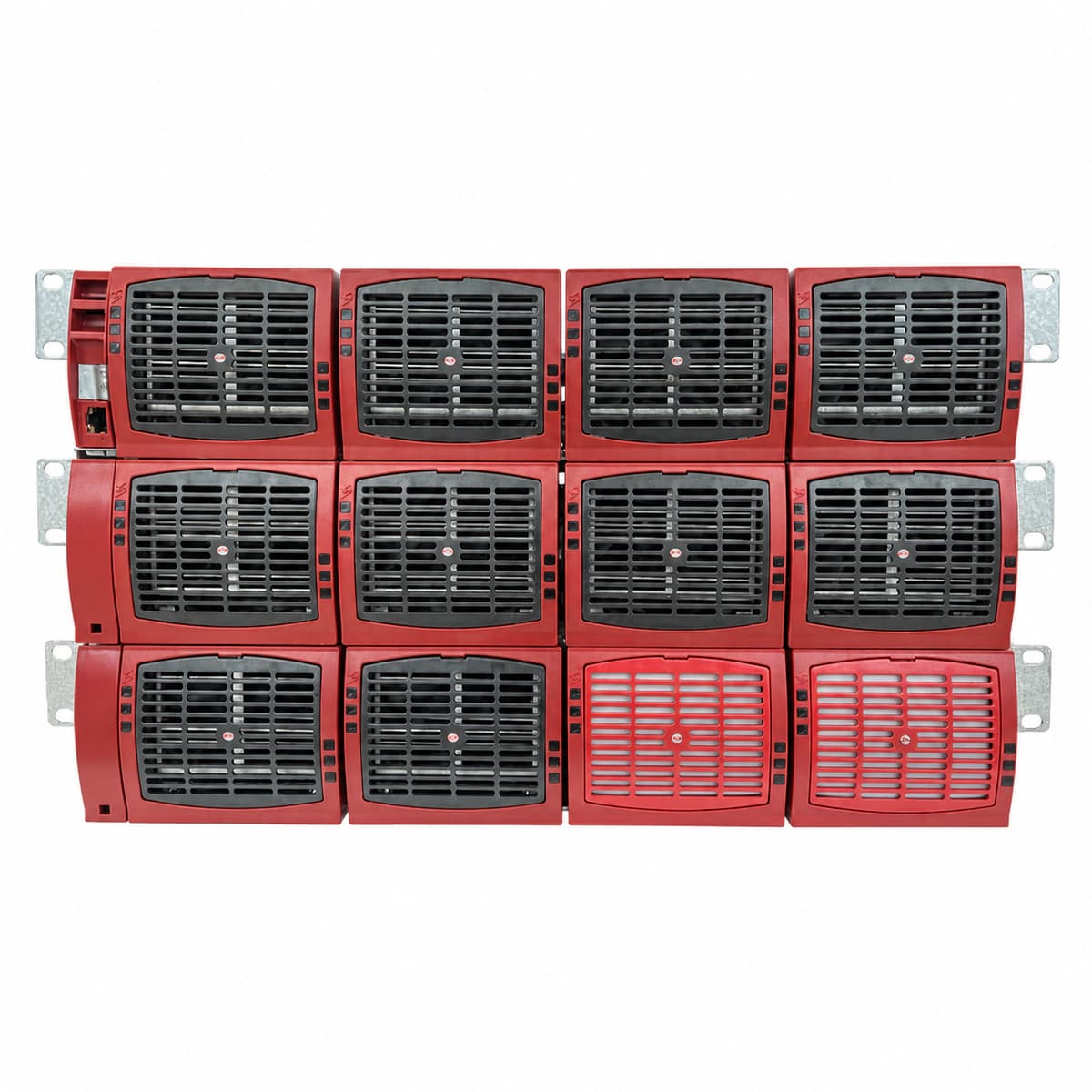
The Delta ESR-48/56A is housed in a compact slide-in hot-swappable steel chassis weighing approximately 2.8kg, purpose-built for Delta standardized telecommunication subracks. The module integrates seamlessly into Delta EPS 48/56 modular shelves, 19-inch 3U/5U embedded power distribution subracks, and large multi-cabinet DC plants scalable up to 3000A.
At the rear, the unit features a high-current blind-mate connector integrating heavy-duty DC copper blades, AC input prongs, and precision signal contacts. The rectifier supports autonomous analog active current sharing (maintaining load balance within ±3% even if supervisory communications are interrupted) while enabling full digital orchestration via RS485 or CAN bus when connected to Delta PSC3 or CSU controllers. The supervisor monitors AC phase voltage, DC bus level, per-unit thermal status, and warning flags in real time. Engineering guidelines emphasize ensuring full blind-mate engagement and latching front panel screws to prevent contact resistance buildup.
Broad System Compatibility: Native fit for Delta 19-inch embedded shelves and high-capacity central DC plants
Dual Current Sharing: Autonomous analog bus balancing combined with digital supervisor control (imbalance ≤±3%)
Comprehensive Telemetry: Real-time reporting of AC voltage, DC load current, heatsink temperature, and diagnostic codes
Secure Mechanical Latching: Spring-loaded retention levers prevent accidental dislodgement or contact degradation
4. Field Replacement and Modernization Strategies for Legacy Sites
As modern cellular and broadband networks expand power consumption, older telecom base stations require dependable rectifier modernization without disrupting live critical traffic:
The first strategy is live hot-swap replacement: when an active ESR-48/56A module signals a fault or fan stall, field engineers can extract the unit and insert a verified replacement while the system remains fully energized. Prior to insertion, verify that the replacement unit float setting matches the live DC bus within 0.5V, slide the unit smoothly along chassis guide rails, and confirm that the front green run LED illuminates. The second strategy is subrack capacity expansion: systems with unpopulated rectifier bays can be retrofitted with additional ESR-48/56A modules. Engineers must confirm that upstream AC circuit breaker ratings and battery recharge limits (recommended at 0.1C to 0.15C) are properly aligned in the supervisory software before commissioning extra capacity.
Live Non-Disruptive Hot-Swapping: Immediate plug-and-play replacement without service outages or load interruptions
Bus Alignment Check: Pre-insertion verification ensuring DC float calibration aligns with existing plant settings
System Capacity Audit: Verify AC distribution breakers and battery charging current ceilings before adding modules
Thermal Airflow Clearance: Maintain unobstructed front intake and rear exhaust pathways inside the equipment rack
5. Sourcing Guide: Identifying Refurbished Units, Counterfeits, and Worn Components
Due to steady worldwide demand for ESR-48/56A spare parts, unverified brokers often distribute repainted, refurbished, or low-grade assembled units salvaged from decommissioned telecom installations.
Quality inspectors must execute a rigorous three-step physical audit. First, evaluate the chassis and bezel: authentic Delta rectifiers utilize high-grade galvanized cold-rolled steel with clean stampings and flame-retardant molded faceplates, free from overspray paint masking previous scratches. Second, examine rear blind-mate contacts: genuine terminals display thick, uniform gold plating without micro-arcing pits, oxidation, or heat discoloration. Third, inspect internal components: original builds employ top-tier industrial 105°C electrolytic capacitors, neatly wound transformers with pristine insulation, and uniform protective silicone conformal coating across all circuit traces. External barcode serial numbers must correspond directly with internal microcontroller manufacturing records.
Chassis and Silkscreen Inspection: Original galvanized plating, crisp laser-etched lettering, and unmarred factory screws
Rear Connector Integrity: Heavy gold-plated contacts free from electrical burns, pitting, or pin distortion
Internal Component Quality: Authentic tier-one 105°C Japanese/Taiwanese capacitors and intact factory conformal coating
Serial Number Traceability: Exact match between outer barcode stickers and internal electronic manufacturing tags
6. RICEWIND Quality Assurance and Global Supply Capabilities
RICEWIND is an international engineering supplier of telecom energy systems and mission-critical electrical equipment. Every Delta ESR-48/56A rectifier module dispatched from our facilities is subjected to a documented, multi-stage testing procedure.
Our testing regimen includes a 4-hour continuous 56A/3000W burn-in run inside an elevated temperature chamber, dynamic AC line disturbance testing between 88VAC and 300VAC, active parallel current sharing verification, and a 3000VAC dielectric isolation proof. We maintain ready inventory, export-certified custom shock-absorbing packaging, and dedicated technical support for rapid deployment worldwide.
For inventory requests, engineering datasheets, system subrack schematics, or bulk pricing, contact the RICEWIND technical support team via email at lee@ricewind.com or by telephone at +86 17621197907.
100% Full-Load Burn-in: 4-hour continuous 3000W load run with thermal imaging inspection for hotspot prevention
Extreme Grid and Dielectric Testing: Verified operation across 88VAC to 300VAC and 3000VAC hi-pot insulation pass
Export-Grade Secure Packaging: Heavy-duty anti-static barrier bags and custom foam padding for global transit
Dedicated Engineering Support: Direct technical consultation for Delta shelf integration and urgent global dispatch
Engineering Procurement & Technical Desk
For technical datasheets, custom power topology design, or volume export quotations, reach out to HEFENGQI engineers.