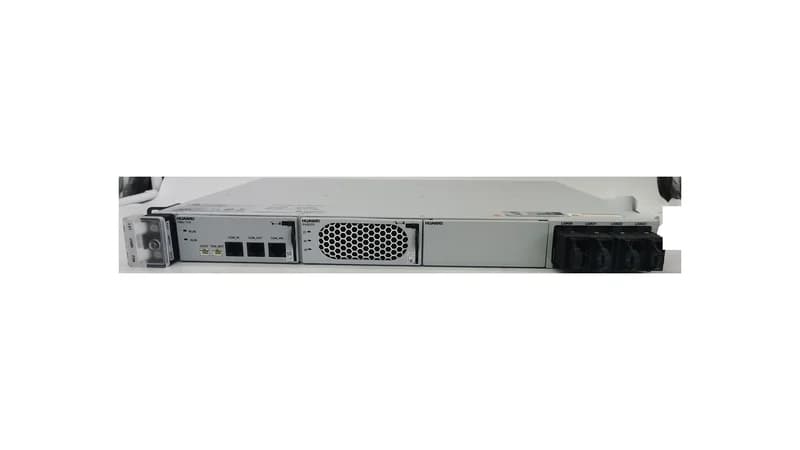
1. Core Electrical Architecture and 1U Ultra-Compact Topology
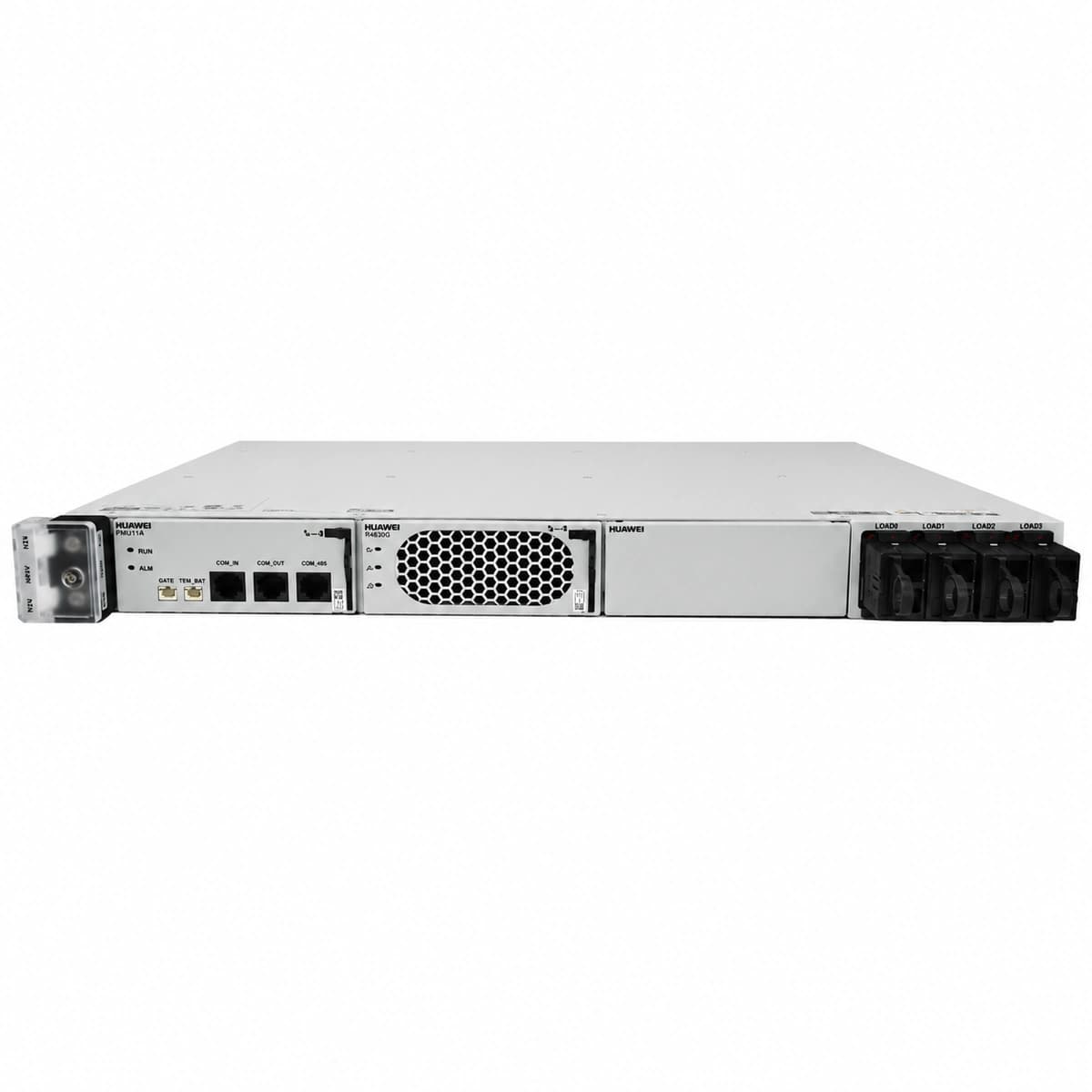
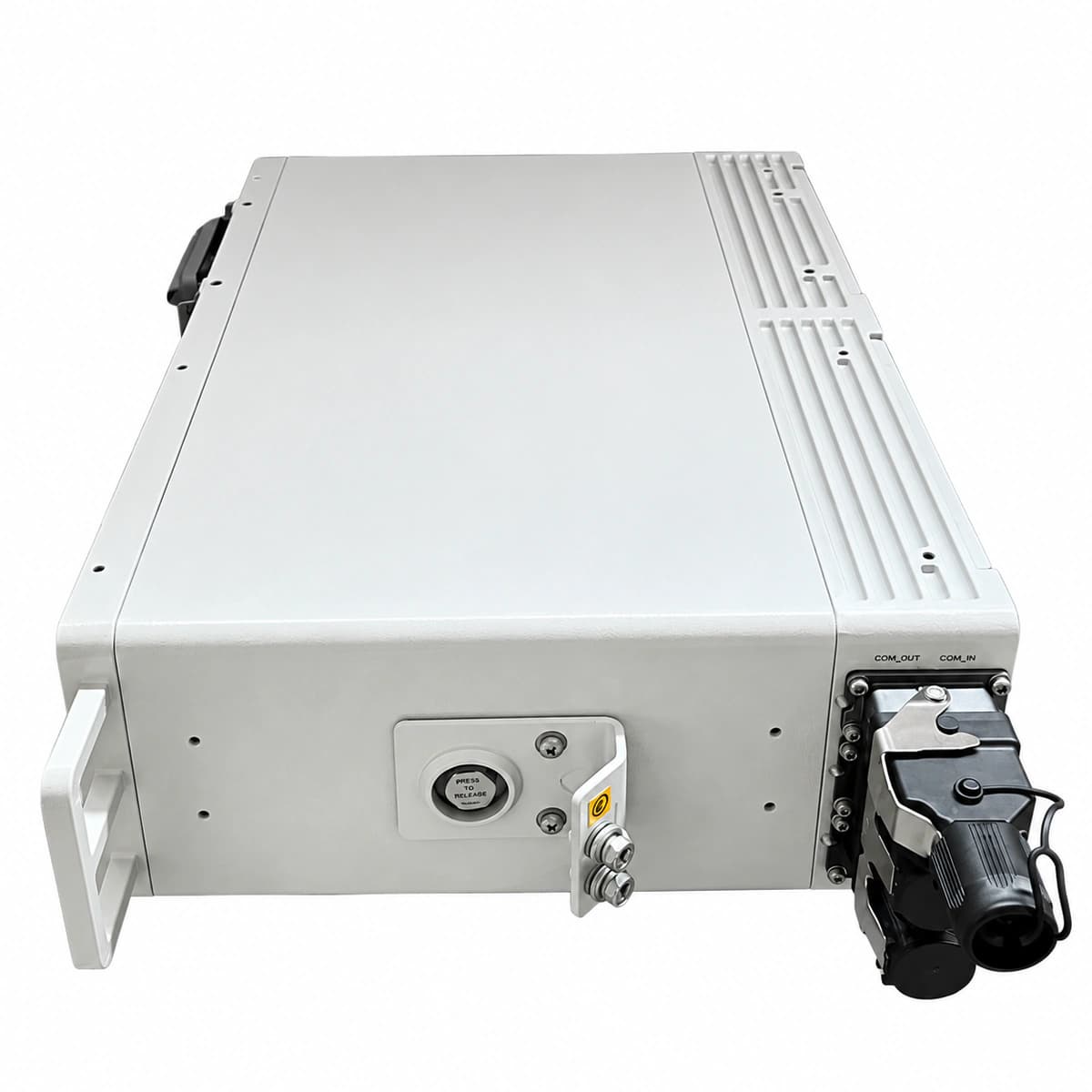
The Huawei ETP48100-B1 (Embedded Telecommunications Power) represents one of the industry's most dependable standard 1U subrack DC power systems deployed across 4G/5G wireless access networks, fiber aggregation facilities, and edge computing nodes worldwide. Engineered for standard 19-inch equipment racks with a profile of only 1U (44.45 mm) height, it seamlessly combines AC power distribution, rectifier bays, central monitoring, and multi-circuit DC load distribution into an ultra-dense chassis providing up to -48VDC / 100A (6000W maximum continuous output capacity).
Featuring an ultra-wide AC input operating window of 85VAC to 300VAC (single-phase or two-phase), the ETP48100-B1 handles severe grid fluctuations without dropping the DC bus. Built-in high-conductivity oxygen-free copper busbars ensure minimal voltage drop and superior thermal dissipation, complemented by an internal 4kV AC surge suppression network (20kA 8/20us nominal rating). When paired with high-efficiency R4850G2 rectifier modules, total system energy efficiency surpasses 96%, delivering exceptionally clean DC power with ripple noise below 200mVp-p under full load conditions.
Standard 1U Form Factor: 19-inch width and 1U height designed for space-constrained street cabinets and micro sites
High DC Power Density: Nominal -48VDC output delivering up to 100A total current and 6000W continuous power
Extreme AC Grid Tolerance: Wide 85VAC to 300VAC input operating range with integrated Class C lightning surge protection
Superior Energy Efficiency: System peak efficiency exceeds 96% with ultra-low standby power dissipation below 8W
2. Rectifier Slot Compatibility and Multi-Module Sizing (R4850G2 / R4830G1 / R4815G1)
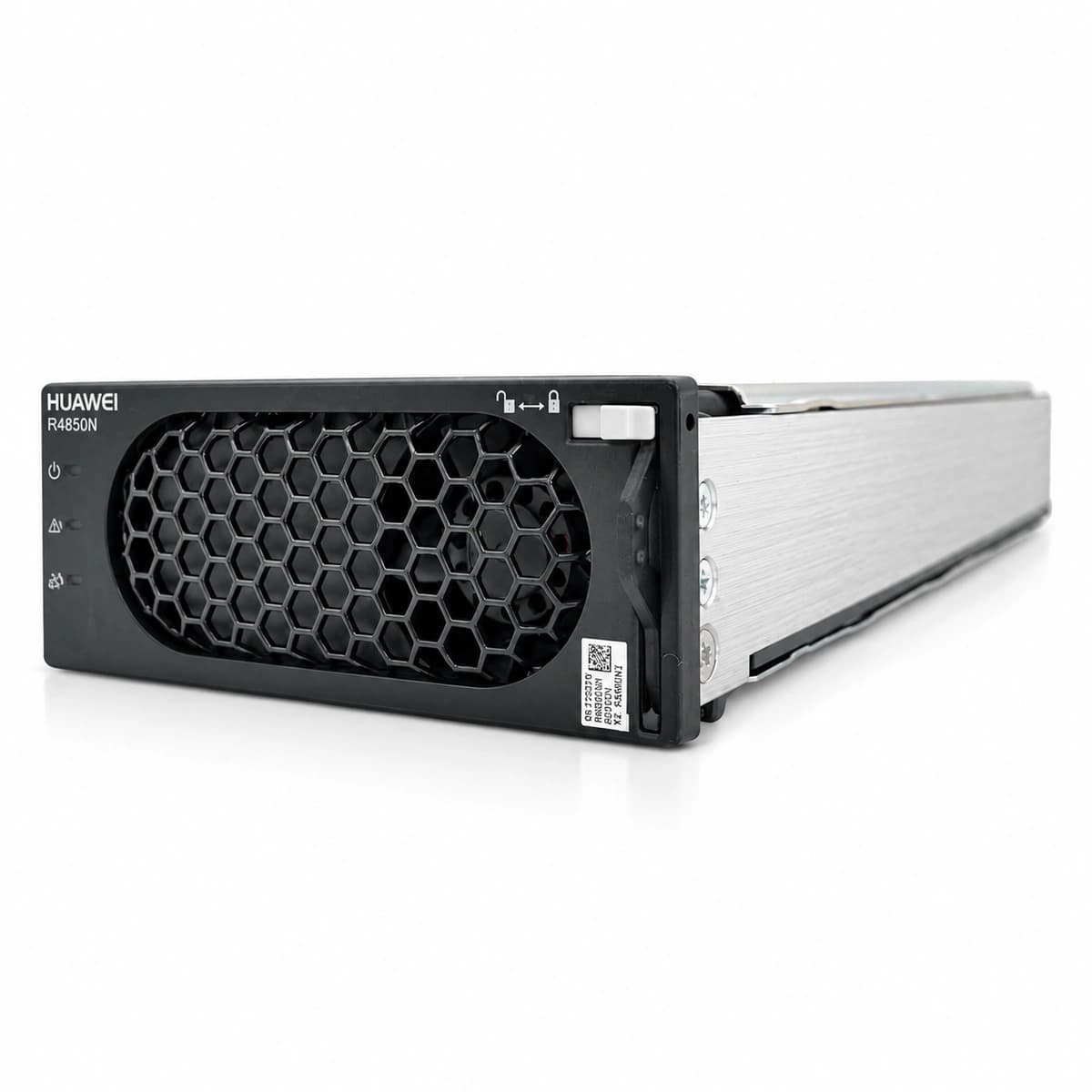
The front right section of the ETP48100-B1 subrack houses two hot-pluggable 1U rectifier slots, supporting Huawei's full line of 1U modular rectifiers. Systems must be configured according to site load requirements and redundancy policies:
The flagship standard deployment utilizes dual R4850G2 modules (50A / 3000W, 96% gold efficiency rating), forming a full 100A capacity 1+1 redundant power package. For small access nodes with lower power requirements, the subrack accommodates R4830G1 (30A / 2000W) or R4815G1 (15A / 1000W) units to optimize initial capital expenditure. Critical engineering instruction: While the internal communication bus automatically recognizes installed rectifier models, mixing rectifiers of different current ratings or efficiency tiers in the same subrack is strictly prohibited. Current-sharing loops become asymmetrical when mismatched modules are paired, driving the higher-rated rectifier into thermal stress and compromising overall availability.
Hot-Swappable Redundancy: Two 1U rectifier slots support live replacement without interrupting service
Broad Modular Compatibility: Native integration with R4850G2 (50A), R4830G1 (30A), and R4815G1 (15A)
Strict Matching Protocol: Deploy identical model versions and firmware revisions within the subrack (current imbalance <= +/-3%)
Automated Module Hibernation: Coordinated sleep scheduling runs active rectifiers at their optimal efficiency range
3. Supervisory Controller SMU01C / SMU01B Features and Remote Management
Centralized intelligent control in the ETP48100-B1 is driven by the hot-swappable Site Monitoring Unit (SMU) seated on the left side of the front panel. Depending on site infrastructure and telemetry requirements, systems are outfitted with either SMU01C or SMU01B units:
The SMU01C features a backlit LCD screen paired with physical navigation buttons, enabling technicians to directly monitor AC voltages, phase currents, battery state-of-charge, ambient temperatures, and active alarms on-site. It incorporates RS485 and CAN serial interfaces running standard Modbus and YDN23 protocols for seamless telemetry export to centralized operations centers. The SMU01B provides essential LED status monitoring and remote configuration via serial terminal. Both controllers deliver precise three-stage battery management (constant current bulk, constant voltage float, and dynamic temperature compensation at -3mV/deg C/cell), protecting reserve energy assets and maximizing battery service life.
Local User Interface: SMU01C backlit LCD and intuitive keypad provide instantaneous diagnostics and field parameter adjustment
Industrial Telemetry Integration: RS485 serial communication and configurable dry contact outputs connect directly to central management platforms
Advanced Battery Care: Automated float-to-boost charging transition, cyclic discharge self-testing, and programmable charge rate limits
Comprehensive Alarm Logic: AC surge alerts, rectifier faults, DC bus over/undervoltage warnings, and external sensor inputs (temperature/door/smoke)
4. DC Distribution Circuits, Low Voltage Disconnect (LLVD/BLVD), and Site Retrofits
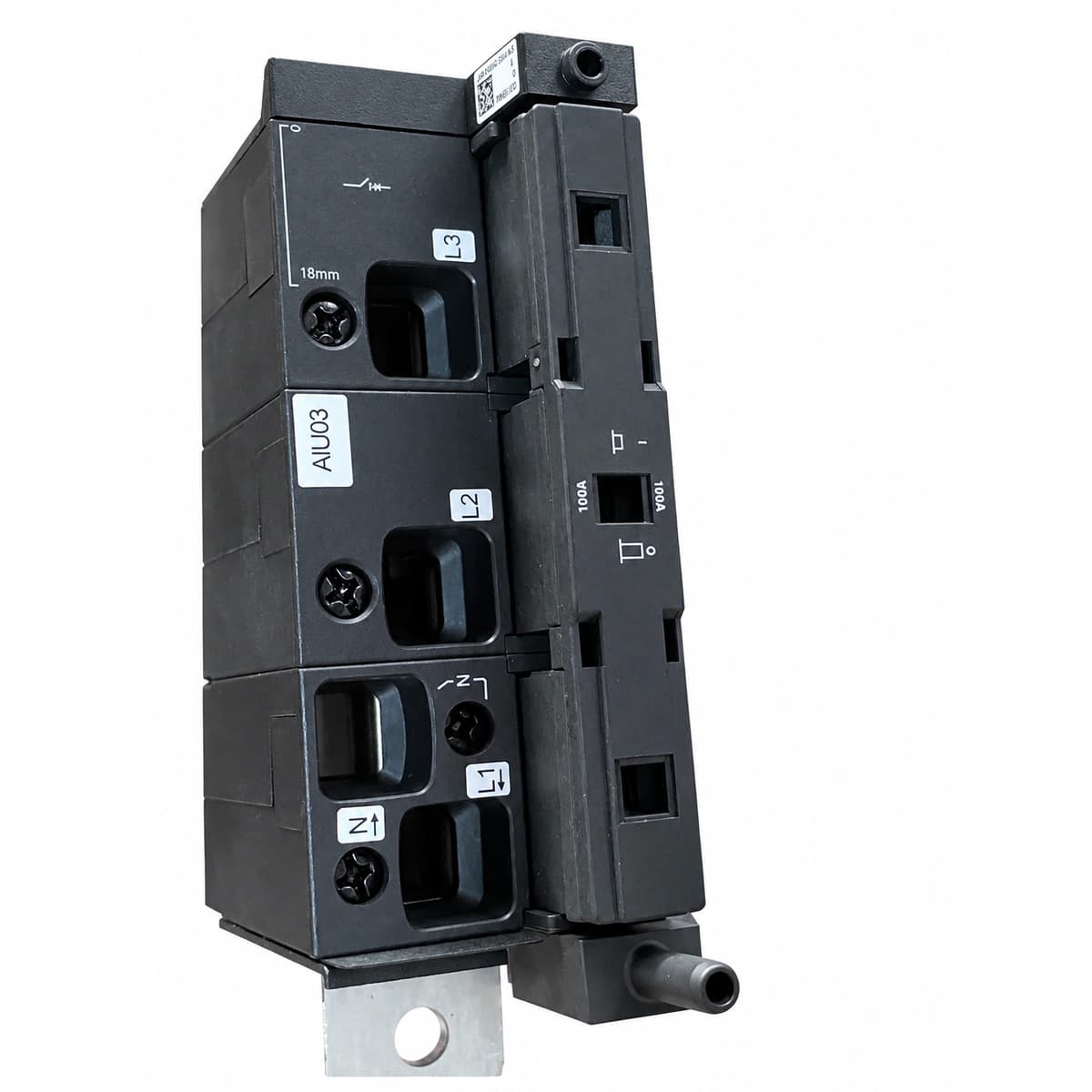
The integrated DC distribution section acts as the primary safeguard for mission-critical telecommunications payloads. The ETP48100-B1 panel incorporates high-breaking-capacity DC miniature circuit breakers (MCBs), offering two dedicated battery circuit branches (typically 1x100A or 1x80A breakers) alongside multiple load distribution outputs with dual-stage low voltage disconnection (LLVD and BLVD):
During prolonged commercial grid outages, when battery voltage drops below the first threshold, the LLVD contactor automatically sheds non-priority loads such as comfort air conditioning and secondary telemetry equipment to preserve reserve energy for core transceivers. As battery voltage drops further toward the deep discharge cutoff (-43.2VDC nominal), the BLVD contactor opens to isolate the battery bank, completely preventing permanent cell plate sulfation. In legacy telecom shelter modernizations, swapping bulky 3U to 5U older power systems with the 1U ETP48100-B1 recovers 2U to 4U of rack space for additional BBU units, routers, or optical switches.
Two-Stage Load Shedding: Independent LLVD shedding for secondary equipment and BLVD deep discharge cutoff for battery protection
Segmented DC Breaker Circuits: Multiple individually protected load terminals isolate line faults from compromising the main DC bus
Substantial Rack Optimization: 1U architecture replaces bulky legacy cabinets, liberating up to 70% vertical rack space
Field Installation Discipline: Strictly torque all terminal lugs to manufacturer specifications using insulated hydraulic crimping tools
5. Sourcing Guide: Identifying Refurbished Chassis, Counterfeit Components, and Build Quality
Because the Huawei ETP48100-B1 commands massive global demand across the secondary telecom equipment market, procurement teams frequently encounter cosmetically resprayed used units and substandard counterfeit assemblies sold as new. A rigorous four-tier quality inspection must be enforced prior to site deployment:
First, examine the chassis sheet metal and finish: authentic Huawei subracks utilize premium corrosion-resistant electro-galvanized fingerprint-free steel plates with laser-precise punch edges and uniform deburring. Repainted units feature rough powder coating with paint bridging inside screw holes and worn rack-mounting ears. Second, inspect the backplane copper busbars and blind-mate connector pins: genuine units present uniform, lustrous silver-tin electroplating without hairline arcing pits or copper oxide tarnishing. Third, check breaker brands: authentic units contain branded high-reliability DC breakers manufactured to Huawei's OEM engineering tolerances, whereas substandard clones substitute generic breakers that suffer from high contact resistance and failure to trip. Fourth, verify electronic labels: the physical barcoded serial number on the outer frame must correspond exactly with the electronic product serial code read directly by the SMU controller.
Chassis Integrity and Coating: OEM electro-galvanized zinc steel without overspray, burrs, or mechanical warping
Backplane Connector Condition: Spotless silver-tin plated multi-pin connectors showing zero signs of electrical arcing or friction wear
Component Authentication: Certified brand-name DC circuit breakers matching official Huawei bill of materials specifications
Three-Way Electronic Serial Matching: Physical barcode sticker, laser-etched chassis label, and digital controller readout must align perfectly
6. RICEWIND Quality Assurance Standards and Global Procurement Support
RICEWIND is a premier global provider of critical digital energy solutions and infrastructure hardware. Every Huawei ETP48100-B1 system leaving our integration facilities undergoes comprehensive 100% full-load pre-shipment qualification inside dedicated testing bays:
Our testing procedure includes a 4-hour continuous 100A load burn-in run under thermal surveillance, dynamic AC input swing tests across 85VAC to 300VAC, physical actuation testing of both LLVD and BLVD contactor loops, calibration of all SMU01 telemetry channels, and 3000VAC high-potential dielectric withstand verification. Systems are hermetically sealed in multi-layer anti-static packaging, cushioned with custom high-density cellular polyethylene foam, and secured inside export-grade reinforced containers to ensure flawless delivery via air, sea, or multimodal transit.
For technical inquiries, dimensional drawings, modular sizing consultations, or international commercial quotations, please reach out directly to the RICEWIND engineering team at lee@ricewind.com or via telephone/WhatsApp at +86 17621197907.
100% Full-Capacity Load Burn-in: 4 hours of uninterrupted 100A operation verified with infrared thermal cameras
Verified Protection Loops: Calibrated LLVD/BLVD trip voltages and precision supervisory telemetry tested on every unit
Export-Grade Shockproof Packaging: Anti-static wrapping, precision-cut EPE foam padding, and reinforced impact-resistant cartons
Dedicated Telecom Engineering Support: Rapid global delivery from bonded logistics hubs with complete technical documentation
Engineering Procurement & Technical Desk
For technical datasheets, custom power topology design, or volume export quotations, reach out to HEFENGQI engineers.